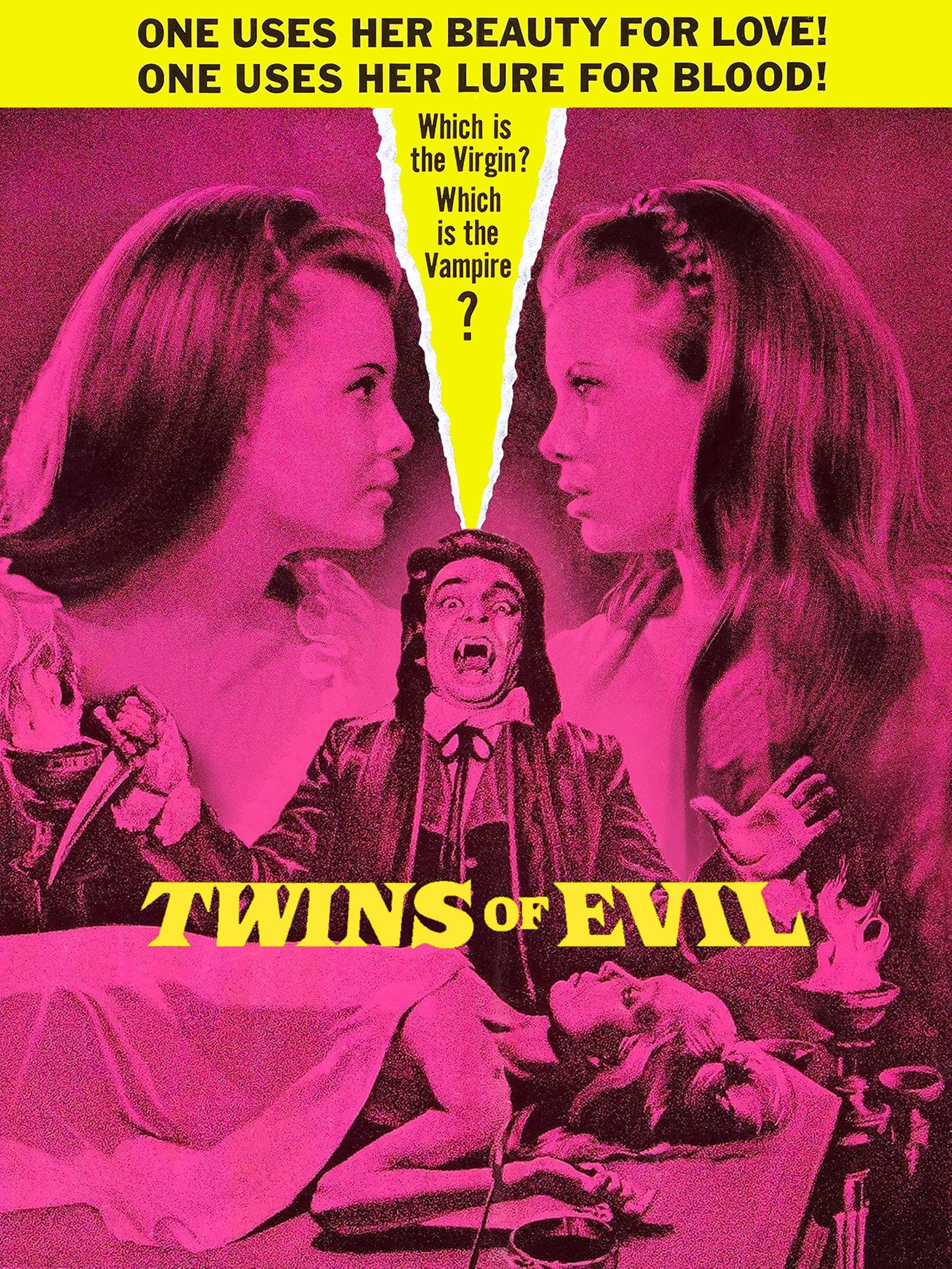
Year: 1971
Director: John Hough
Cast:
Rating: 07/10
This was a fun vampire flick in the classic Hammer vein -- their saucy, sexy early '70s vein, but still. You don't knock the good stuff when you find it, and this one ain't bad.
The movie starts off with a woodcutter and his girl trying to get intimate. She hears a noise outside, and he goes to investigate. You might be tempted to think they both end up vampire chow, seeing as how this is a Hammer film. But no! It's a roving band of religious fanatics out hunting for vampires! They conk the woodcutter on the noggin and burn his girl at the stake, even though she waves a crucifix in their faces. It's a profound inversion of the usual vampire-victim cold opening one usually sees, painting religious fanatics as the photo negative of the vampire -- a polar opposite in every way, yet equally as evil.
This duality is maintained through the presentation of two characters: Count Karnstein, our resident vampire, is young, sensual, decadent, and determined to corrupt everyone around him. Gustav Veil (pronounced "Vile," by the way -- very subtle), the leader of local religious sect "The Brotherhood," is old, sexless, austere (his first words to his nieces are to chastise them for their flambuoyant attire), and puritanical to the point of obsession. Karnstein acts alone; Weil, in a group. Karnstein is charming but deceitful; Weil is severe but direct. The common thread that unites them is that their extreme natures drive them both to commit atrocious crimes. Both are cruel to women: Karnstein humiliates his mistress in front of the Brotherhood, kills a peasant girl with a dagger in a desperate attempt to summon Satan, and seduces the "bad" twin Frieda. Weil, for his part, keeps his neices locked up, beats them when they disobey him, and of course rides out every night in search of attractive young single women to burn at the stake.
In fact, I would go so far as to say that Karnstein and Weil are the real "twins of evil" of the title. After all, only one of the Collinson twins (Frieda) is actually evil; the other, Maria, is portrayed as the innocent victim of her sister's manipulations and machinations.
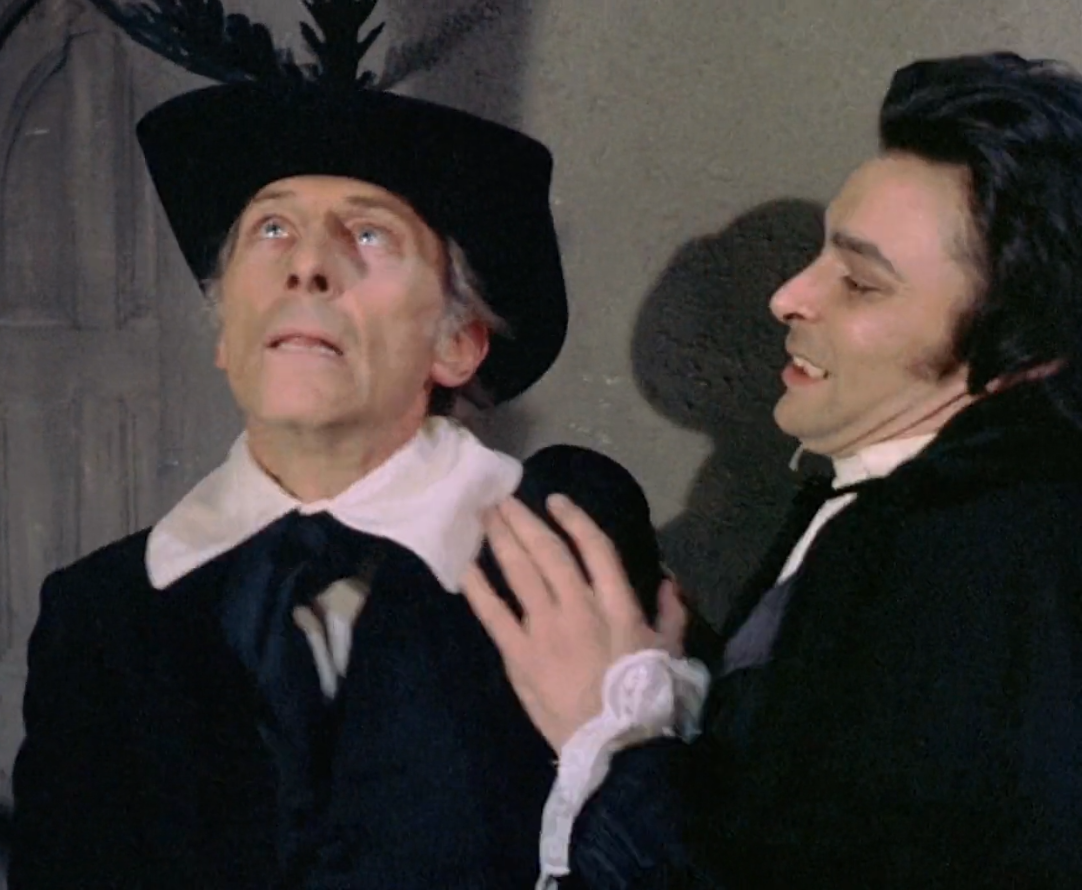
Eventually, however, their diametrically opposed characters do overcome this perverse parallelism. Because there is one important difference between the two, despite their flaws: Karnstein does evil because it is evil. He consciously seeks it out. Weil, on the other hand, does what he does because he believes it to be in the service of goodness. He burns these girls at the stake because he wishes to save them from corruption. His final effort at redemption may be ineffectual, but does appear to be heartfelt. Karnstein, without his "twin" around as a foil to define himself against, soon follows Weil to the grave without adding much more to the mix.